01 Wash
Clean before anything else.
A low-pressure soft wash takes off dirt, mildew and chalk without forcing water behind the siding. Then it dries.
Exterior painting
Siding, trim, doors, decks and boathouses. Washed, scraped, primed, caulked and given two coats.
September is usually the last steady window for exterior paint here. Booking now for spring.
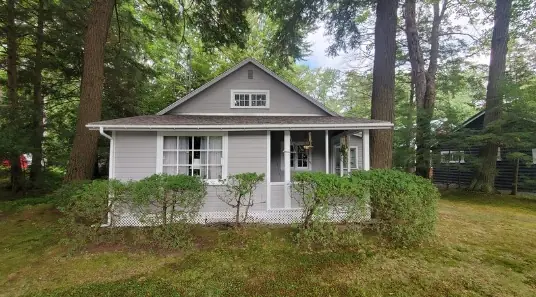
How a house gets painted
01 Wash
A low-pressure soft wash takes off dirt, mildew and chalk without forcing water behind the siding. Then it dries.
02 Scrape & spot-prime
Failing paint is scraped and feather-sanded. Every bare spot gets primer so the topcoat bonds instead of peeling.
03 Caulk & protect
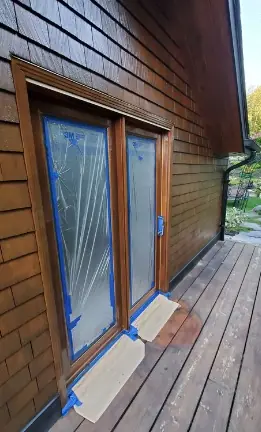
Open joints at trim, corners and windows get flexible exterior sealant. Windows, lights, plants and walkways are covered.
04 Two coats
Surface warm and dry, well above the dew point, no rain due. Shaded sides first, following the sun around the house.
05 Evening
Covers off, a walk around together, touch-ups done. You come home to a house that looks cared for.
Scope
Not included: rotten board replacement beyond small repairs (quoted separately), roofing, eavestrough repair, full lead abatement, or spraying near neighbours’ property without containment.
Proof
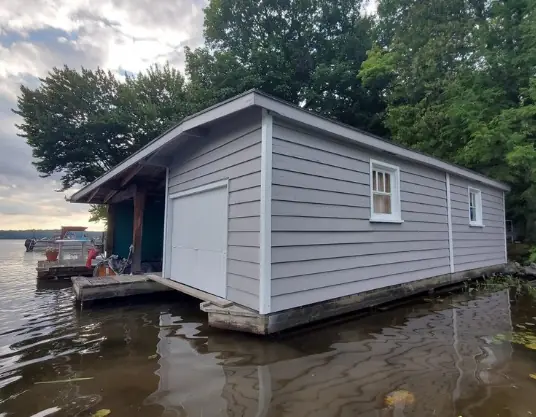
A red-brick side wall going white, and cottage, boathouse, deck and dock work around the lake.
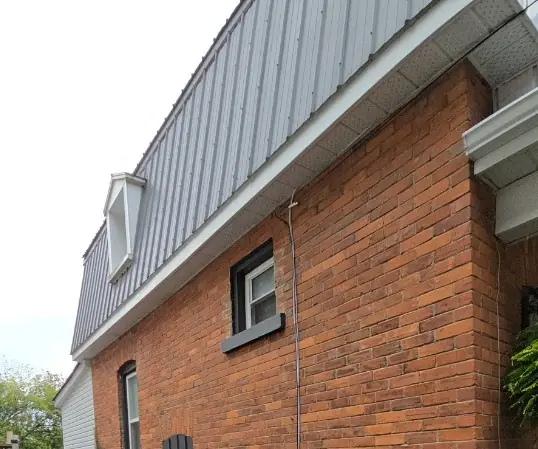
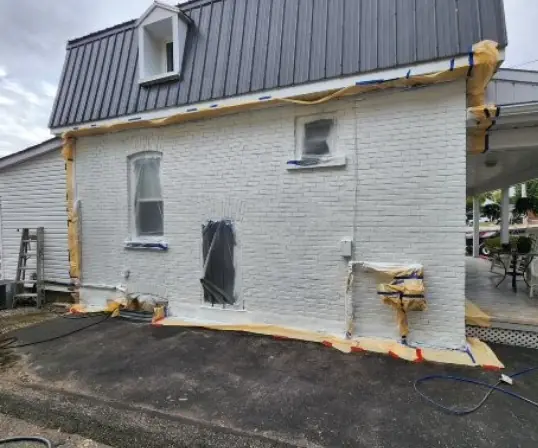
The same brick house, 2025: before, and during the final coats with masking still up.
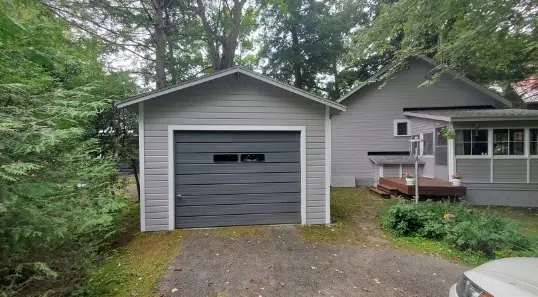
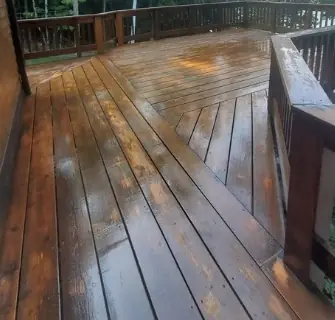
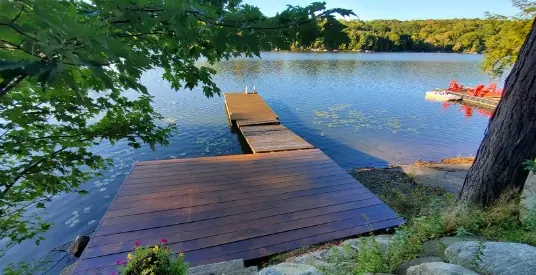
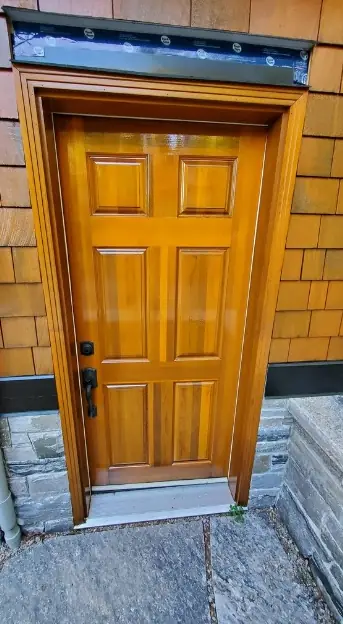
Read client reviews on Google and Facebook.
Every space is different, so pricing comes after a free walkthrough.
Care & warranty
1 to 3 year workmanship warranty, depending on the surface: if peeling, cracking or another defect from our application shows up within the term for that surface, we come back and fix it. It doesn’t cover damage, moisture or structural problems, or normal wear. Deck and dock staining is regular maintenance, so it has no multi-year warranty: we promise proper prep and even coverage, and offer maintenance visits. Your written quote spells out exactly what’s covered.
Every home is different, so pricing comes after a free walkthrough. Siding type, height, access and the amount of prep all shape it. You get a written quote after the walkthrough.
Late May to June, and September to early October, are the most reliable. Paint makers want a dry surface, the wall warm enough for the product, at least 3 °C above the dew point, and no rain for the next few hours. Nights matter too.
Usually into early October. Low-temperature paints apply down to about 2–4 °C, but nights have to stay above the minimum for a day or two after. If the forecast doesn’t allow it, we move the date rather than risk peeling.
Yes, with a paint and colour made for vinyl. Going much darker than the original can make vinyl warp in the sun, so we choose from vinyl-safe colours.
Yes, and it often looks new again. It’s usually chalky, so it’s washed until a wipe comes back clean, primed with a bonding primer, then given two coats.
It can look beautiful, but it’s a long-term commitment. Brick needs a breathable masonry coating, like mineral paint or limewash, so moisture can get out, and mortar needs repairing first. We go through the pros and cons honestly at the walkthrough.
Yes. We use ladders and scaffolding, and a lift when the height or ground calls for it. The access plan is in your quote.
We use premium paints from Benjamin Moore and Sherwin-Williams, among others, low-VOC wherever it suits. You’re welcome to choose. Products and sheens are listed in your quote.
Yes, a 1 to 3 year workmanship warranty on exterior painting, depending on the surface. If peeling, cracking or another defect from our application shows up within the term for that surface, we come back and fix it. It doesn’t cover damage, moisture or structural problems, or normal wear. Deck and dock staining is regular maintenance, so it has no multi-year warranty: we promise proper prep and even coverage, and offer maintenance visits. Your written quote spells out exactly what’s covered.
We don’t paint into rain or onto wet surfaces. Weather days are built into the schedule, and you’re kept updated on any change.
Yes. Clean, brighten and dry, then a penetrating or semi-transparent stain. Most decks are ready to walk on in 24–48 hours.
Health Canada says paint from before 1960 probably contains lead, and exterior paint from 1960 to 1990 may. We test before scraping, avoid dry sanding and heat guns, contain chips with drop sheets, and clean up carefully. Full abatement is left to specialists.
Book a walkthrough
Coffee, a video call, or a visit. Then a written quote.
What’s your siding?
Most peeling comes from the wrong prep for the material. Here is what each common siding needs, in plain words.
Scrape, feather-sand, prime bare wood, then caulk joints. Brush into the laps.
Usually chalky. Wash until a wipe comes back clean, then a bonding primer and two coats.
Can be painted, but only in vinyl-safe colours. Going much darker can warp it in the sun.
Needs a breathable masonry coating, like mineral paint or limewash, or moisture gets trapped. Mortar is repaired first.
Cracks are sealed and the surface primed. Stucco takes a thicker nap, and fibre cement paints well.
Older home? Paint from before 1960 probably contains lead, and paint from 1960 to 1990 may. It’s tested before any scraping, and the work is done lead-safe.
How the space helps
The first thing you see when you pull in is a house that looks looked-after.
No more peeling corners to notice every time you walk to the door.
A clean, sealed deck or dock that feels good to sit on at the end of the day.
Sealed joints and sound paint going into the cold season, instead of one more thing to worry about.
While we work, we practice Dissolve: nothing carried into the space but care. About the practice
Glossary
The words you may see in your quote.
The flat board along the edge of the roof. The eavestrough hangs on it.
The underside of the roof overhang. It’s often vented aluminium or vinyl, and sometimes wood.
Horizontal boards that overlap. Paint has to be brushed into the laps and the bottom edges.
Vertical boards with narrow strips over the joints, and split or sawn cedar shingles. Both need brush work.
Old paint breaking down into powder. It has to be washed off, or new paint sits on dust.
The temperature at which moisture forms on a surface. Paint makers want the wall at least 3 °C (5 °F) above it.
How warm the wall is, not the air. Measured with an infrared thermometer. Sunlit walls run much hotter.
Low-pressure cleaning with a mildew cleaner, so water isn’t forced behind the siding.
Priming bare or repaired spots so the topcoat bonds and looks even.
Sanding the edges of scraped paint thin so they don’t show through the new coat.
Flexible, paintable caulk for joints that move with the seasons. Different from filler, which is for holes.
Brushing or rolling paint in right after spraying, to push it into texture and laps.
How thick the dry paint is. Two full coats reach the thickness the paint is rated for.
Light reflectance value: how light a colour is. Vinyl needs vinyl-safe colours if you go darker.
Mineral paint or limewash that lets moisture out of brick instead of trapping it under a film.
Often paired with
 Illustration
Fall exterior caulkingWindows, doors and siding joints sealed before the freeze.Details
Illustration
Fall exterior caulkingWindows, doors and siding joints sealed before the freeze.Details
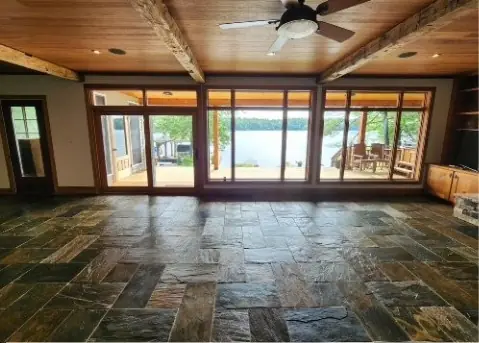 Interior paintingWalls, ceilings, trim, doors and stairs. Careful prep, clean lines, two finish coats.Details
 Illustration
ZenscapingNew: zen-style gardens with raked gravel, set stones and quiet planting. Now booking first projects.Details
Illustration
ZenscapingNew: zen-style gardens with raked gravel, set stones and quiet planting. Now booking first projects.Details
Where we work
Serving Simcoe County, York Region and the Grey Highlands. See the map.