01 Look closely
Cracked, shrunk, pulled away.
We check each window and door: where the old bead has split, gone hard, or let go of one side.
Fall caulking
Windows and doors re-sealed from the outside: old caulk out, backer rod in, a clean new bead. Fall is the best window; missed it? We can still seal on dry winter days with cold-rated sealants.
Fall is caulking season: now through early November is the best window. Missed it? Dry winter days still work with cold-rated sealants.

How a window gets sealed
01 Look closely
We check each window and door: where the old bead has split, gone hard, or let go of one side.
02 Cut out & clean
Failed caulk is cut and scraped out, dust and loose paint brushed away, the joint dry and frost-free.
03 Backer rod
Deep gaps get closed-cell backer rod, a little wider than the gap, so the new bead is the right shape and only sticks to two sides.
04 New bead
Exterior-grade flexible sealant, colour-matched, pressed in and tooled. Weep holes are left open so water can drain.
05 Winter
Fewer draughts at the window, and water kept out of the wall when the snow comes.
Scope
Not included: window replacement, fogged glass units, flashing or trim rebuilds (quoted separately), interior caulking and weatherstripping unless added.
Proof
Glass and frames are protected before any exterior work. The illustration shows the job itself.

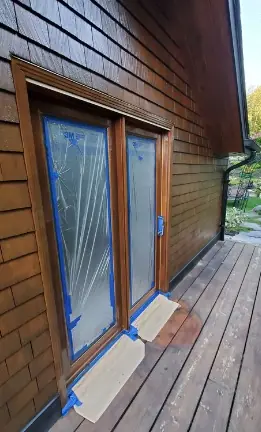
Close-up photos of our caulking work are being added this fall. Ask and we’ll send recent examples.
Read client reviews on Google and Facebook.
Every space is different, so pricing comes after a free walkthrough.
Care & warranty
2-year workmanship warranty: if a seal we installed cracks, pulls away or fails within two years of completion, we come back and fix it. It doesn’t cover damage, moisture or structural problems, or normal wear. Your written quote spells out exactly what’s covered.
Every home is different, so pricing comes after a free walkthrough. The number of windows and doors, gap size, height and access all shape it. You get a written quote after the walkthrough.
Most everyday exterior sealants need a clean, dry, frost-free surface at 4 °C or warmer, so September to early November is the best window here. A few cold-rated sealants are made for winter: their labels allow application down to about -18 °C, though cure slows right down.
Yes, on dry, frost-free days, with cold-rated sealants kept warm until they’re used. We work midday on the sunny side, check the surface temperature first, and reschedule if it’s wet or frosty. Fixing open joints where water gets in comes first; colour-matched paint over the new bead waits for spring. Fall is still the best time, because joints are at their widest in deep cold and every sealant cures faster in mild weather.
Yes. Interior caulking around trim, casings and baths is fine any time of year because the house is warm and dry. It helps with drafts, but the outside bead is what keeps water out of the wall.
We remove it. New sealant over failed caulk can’t bond to the frame and siding properly, and it lets go again quickly.
It’s round foam pushed into deeper gaps. It sets how deep the bead is and stops it sticking to the back of the joint, so it can stretch with the seasons instead of tearing.
It can help. Natural Resources Canada says air leakage can be 20–30% of heat loss in older homes. But savings depend on the house, so we don’t promise a number. What you’ll notice is fewer draughts.
Usually a paintable hybrid sealant rated to the industry standard for exterior sealants, colour-matched to your trim. Polyurethane for masonry joints, and silicone for some metal and glass. It’s listed in your quote.
Yes. We use ladders and scaffolding, and a lift when the height or ground calls for it. Any extra access is shown in your quote.
Yes, a 2-year workmanship warranty. If a seal we installed cracks, pulls away or fails within two years of completion, we come back and fix it. It doesn’t cover damage, moisture or structural problems, or normal wear. Your written quote spells out exactly what’s covered.
Yes. Sealants come in common trim colours, and paintable ones can be painted to match exactly.
We can add interior trim caulking and simple weatherstripping. Moving parts like sashes and doors need weatherstripping, not caulk.
You’ll get photos and notes. Small trim repairs can be quoted. Window replacement is for a window company.
Book a walkthrough
Coffee, a video call, or a visit. Then a written quote.
Which sealant?
Outside, the bead has to stretch and shrink with the seasons for years. Here’s what goes where.
Paintable, UV-stable, flexible, bonds to most siding. Our usual choice.
Tough and paintable. Good on brick and concrete joints.
Very flexible and long-lived, but usually can’t be painted.
Fine for interior trim. Not for exterior window joints.
Exterior sealants are rated to an industry standard for how much they can move. Most want the wall at least 4 °C, clean and dry, which is why fall timing matters. Missed fall? A few cold-rated sealants can go on in winter on dry, frost-free days.
How the space helps
The reading chair by the window stays a place you want to sit.
Sealed gaps take the edge off wind noise on the worst nights.
Rooms hold the temperature you set more evenly.
Water stays out of the wall, and that’s one fewer thing on your mind as it gets cold.
While we work, we practice Dissolve: nothing carried into the space but care. About the practice
Glossary
The words you may see in your quote.
The gap between a window or door frame and the siding or brick around it.
The standard for exterior elastomeric sealants. It rates how far a bead can stretch and squeeze (±25%, ±35%, ±50%).
A flexible sealant that stretches and squeezes back with the joint. Exterior window and door sealants are this type.
Round closed-cell foam set into a deep gap so the bead is the right depth and shape.
The bead sticks to the frame and the wall only, not the back of the gap, so it can stretch without tearing.
Pressing and smoothing the fresh bead so it fills the joint and grips both sides.
Small drainage openings at the bottom of windows and brick. They must stay open.
The surface skins over, then it’s dry to touch, then it’s fully cured (weeks in the cold).
Seals for the moving parts of windows and doors. Caulk is for joints that don’t open.
Often paired with
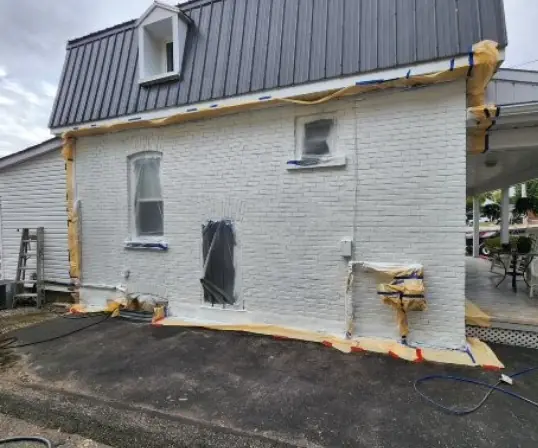 Exterior painting & stainingSiding, brick, trim, soffit and fascia, doors, decks and cabins. May to October.Details
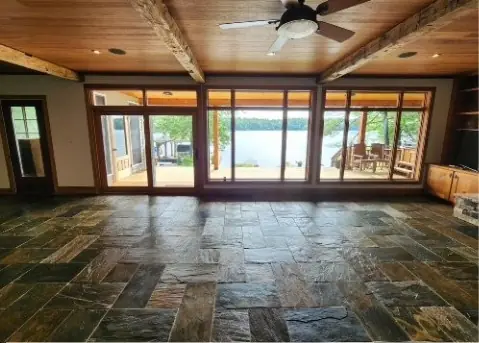 Interior paintingWalls, ceilings, trim, doors and stairs. Careful prep, clean lines, two finish coats.Details
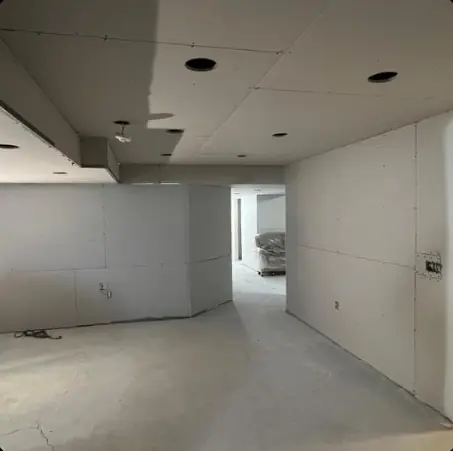 Drywall repair & smooth wall finishesPatches, hanging, taping and mudding. Walls so smooth they look flawless, even in low side light.Details
Where we work
Serving Simcoe County, York Region and the Grey Highlands. See the map.