Interior painting
Interior painting, done slowly enough to be done right.
Walls, ceilings, trim, doors and stairs. Protected, repaired, primed, two finish coats, clean lines.
Fall is a good time for interior rooms: windows closed, schedules settled.
- Written quote before anything starts
- Final walkthrough in good light
- Jordan on every job
- 5-year workmanship warranty
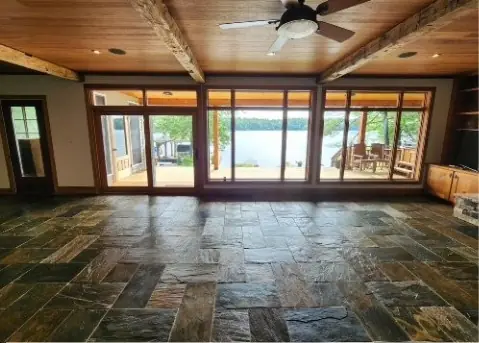
Proof
Real work, 2025.
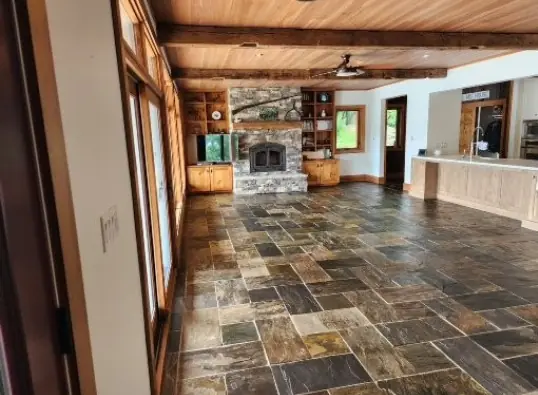
A lake-house interior repaint: walls patched and primed, trim masked, kitchen protected, then two coats.
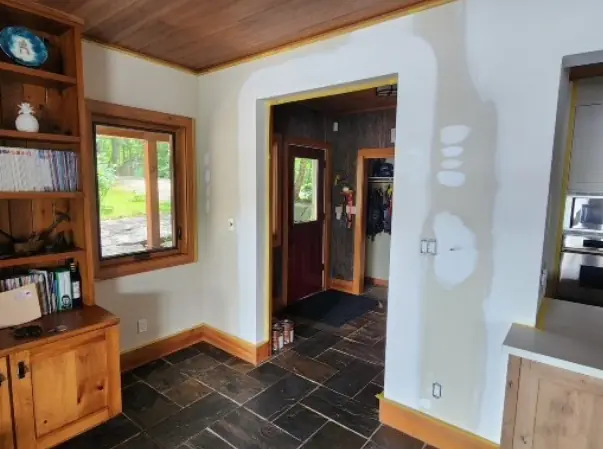
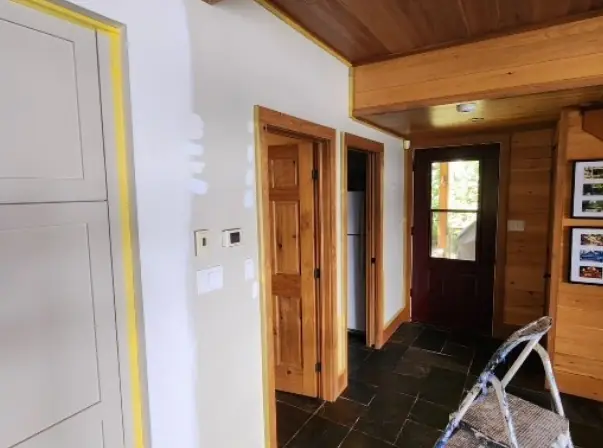
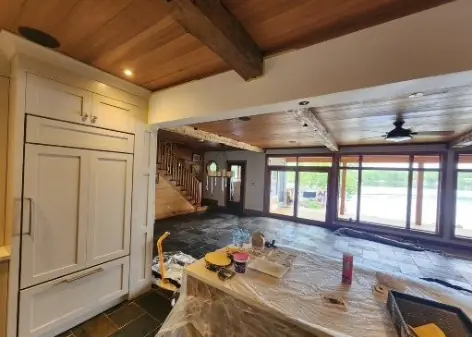
Read client reviews on Google and Facebook.
Every space is different, so pricing comes after a free walkthrough.
Care & warranty
After we leave.
5-year workmanship warranty: if peeling, cracking at joints or seams showing from our work turn up within five years of completion, we come back and fix it. It doesn’t cover damage, moisture or structural problems, or normal wear. Your written quote spells out exactly what’s covered.
- Paint is dry to the touch in about an hour, but it takes about two weeks to fully cure. Go gently and don’t scrub it until then.
- Hang pictures after a few days. Put rugs and furniture back carefully against fresh trim.
- Leftover paint is labelled by room and sheen for future touch-ups.
- Clean marks with a soft cloth and mild soap. Avoid abrasive pads on paint with little or no shine.
How much does interior painting cost?
Every space is different, so pricing comes after a free walkthrough. Height, repairs and trim change it. You get a written quote after the walkthrough.
Do you move furniture and protect floors?
Yes. Furniture goes to the centre of the room and is covered, floors are under drop cloths, and plates and fixtures are masked or removed. Very heavy or fragile items (pianos, art) are best moved by you first.
Can we stay home while you paint?
Yes, most people do. We plan the order of the rooms so you always have a bedroom, a bathroom and the kitchen, and we tidy at the end of each day. Low-VOC paints keep the smell down.
How long will it take?
A bedroom usually takes 1–2 days and a main floor about a week. Drying and recoat time between coats is part of doing it properly.
Which sheen should I choose?
No shine for ceilings, a low shine for most walls, a little more shine for kitchens and baths, and a shiny finish for trim and doors. We go through it together at the walkthrough.
Can you help with colours?
Yes. We look at the light, what the room is for and what’s fixed (floors, counters), then try samples on the wall before you decide.
What paint do you use?
We use premium paints from Benjamin Moore and Sherwin-Williams, among others, low-VOC wherever it suits. You’re welcome to choose. Products and sheens are listed in your quote.
My house is older. Is lead paint a concern?
Health Canada says homes built before 1960 probably have lead paint, and homes from 1960 to 1990 may. We test older paint before any sanding or scraping and work lead-safe. Full lead abatement is left to specialists.
Is there a warranty?
Yes, a 5-year workmanship warranty. If peeling, cracking at joints or seams showing from our work turn up within five years of completion, we come back and fix it. It doesn’t cover damage, moisture or structural problems, or normal wear. Your written quote spells out exactly what’s covered.
Book a walkthrough
Book a walkthrough. We’ll go from there.
Coffee, a video call, or a visit. Then a written quote.
- 705-300-9204 call or text
- jordan@heartmindspaces.com
- Mon–Sat, 9 AM to 5 PM
Glossary
What the terms mean
The words you may see in your quote.
Cutting in
Brushing a straight, clean line where a wall meets the ceiling, a corner or trim, before rolling the open wall.
Back-rolling
Rolling over freshly sprayed or brushed paint while it’s wet, to press it into the surface and even out the texture.
Wet edge
Always rolling back into paint that’s still wet, so there are no lap marks where sections overlap.
Spot-priming
Priming only the patched, stained or bare spots so they take the topcoat like the rest of the wall.
Flashing
Dull or shiny blotches where paint soaked into filler or bare drywall differently. Spot-priming prevents it.
Feather-sanding
Sanding the edges of a patch thin and wide until you can’t feel or see where it ends.
Deglossing / scuff-sanding
Dulling old glossy paint (usually trim) so the new coat bonds instead of peeling.
TSP-substitute wash
A phosphate-free cleaner used to remove grease and grime before painting, then rinsed off.
Caulking vs filling
Caulk is flexible and goes in gaps that move, like trim to wall. Filler is sanded flat and goes in holes and dents.
Primer types
PVA primer seals new drywall. Stain-blocking primer covers water and smoke stains. Bonding primer helps paint stick to slick surfaces.
Sheen / MPI gloss level
How shiny the paint is, from flat (G1) to gloss (G6). MPI is the Master Painters Institute standard pros use.
Sheen names
From least to most shine: flat or matte (G1), eggshell (G3), satin (G4), semi-gloss (G5) and gloss (G6). These are the names you’ll see in your quote.
VOC
Volatile organic compounds, the paint smell. Canada caps interior paint at 100–150 g/L, and low-VOC lines are far below that.
Film build
The thickness of dry paint. Two full coats give the colour depth and wear the manufacturer rates.
Dry vs recoat vs cure
Dry means safe to touch, about an hour. Recoat means ready for the next coat, usually 1–4 hours. Cure means fully hard, about two weeks.
Often paired with
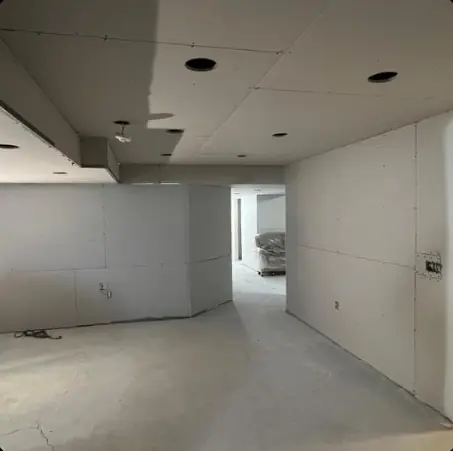 Drywall repair & smooth wall finishesPatches, hanging, taping and mudding. Walls so smooth they look flawless, even in low side light.Details
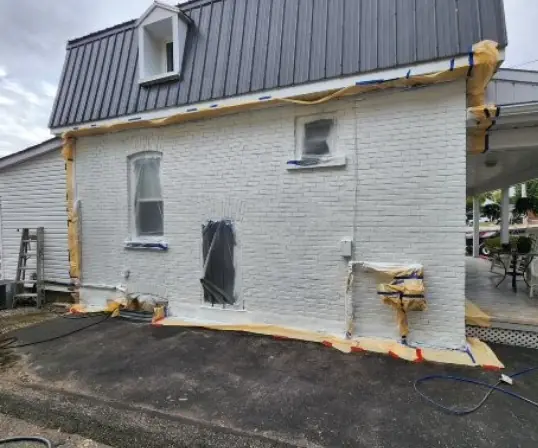 Exterior painting & stainingSiding, brick, trim, soffit and fascia, doors, decks and cabins. May to October.Details
 Illustration
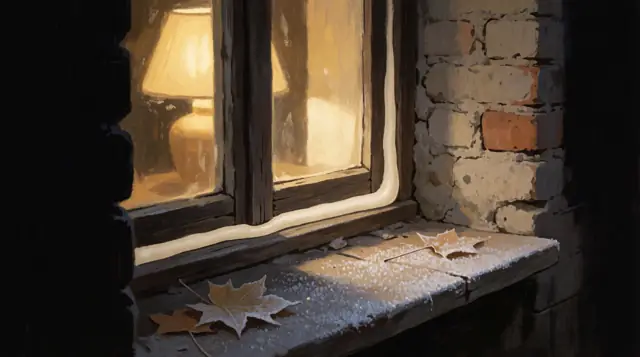
Fall exterior caulkingWindows, doors and siding joints sealed before the freeze.Details
Illustration
Fall exterior caulkingWindows, doors and siding joints sealed before the freeze.Details
Where we work
Serving Simcoe County, York Region and the Grey Highlands. See the map.